The Countdown to Sunrise 2027: Why Your Marking Strategy Needs to Change Now
In the world of supply chain and retail, a major deadline is approaching that will change the face of every product on the shelf. It’s called Sunrise 2027.
Led by GS1—the global authority on barcode standards—this initiative marks the official transition from the traditional "lines and spaces" 1D barcode to data-rich 2D symbols. By the end of 2027, retailers worldwide are expected to have upgraded their systems to scan and process 2D barcodes at the point of sale.
For manufacturers, this isn't just a minor packaging update; it is a fundamental shift in how your products communicate with the world.
What is Sunrise 2027?
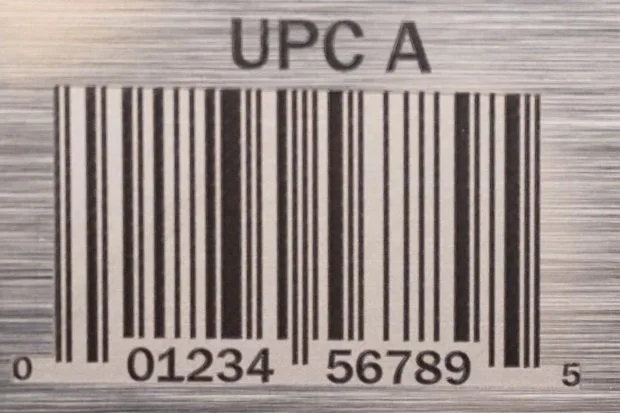
For over 50 years, the UPC barcode has done one thing well: identify a product for price lookup. But today's consumers and regulators want more. They want to know when a product was made, when it expires, and where it came from.
The Sunrise 2027 initiative solves this by moving the industry toward 2D barcodes like the GS1 Data Matrix and GS1 QR Code.
Why the Shift to 2D?
The jump from 1D to 2D is like moving from a business card to an entire filing cabinet. A 2D symbol allows you to encode:
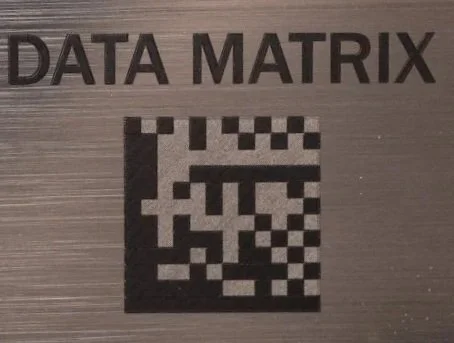
GTINs (Product ID)
Batch/Lot Numbers (Crucial for precision recalls)
Expiration Dates (Improving food safety and reducing waste)
Serial Numbers (Combatting counterfeiting)
Digital Links (Connecting consumers to sustainability data via their smartphones)
The Challenge: Precision and Permanence
As the density of data increases, the physical mark becomes more complex. In a 2D symbol, every tiny square (or "cell") must be perfectly placed and clearly visible. If a single cell is smudged or a label corner is peeled, the entire code becomes unreadable.
This is where traditional methods like inkjet or paper labels are falling short. As we approach 2027, laser marking has emerged as the most reliable way to ensure compliance.
1. Micro-Precision for Dense Data
A GS1 Data Matrix can be as small as 5X5mm. At that scale, ink spread from a printer can blur the "quiet zone" or the internal cells. Lasers use high-precision galvo-scanners to etch symbols with micron-level accuracy, ensuring "Grade A" readability every time.
2. Indestructible Traceability
Unlike labels that can fall off or ink that can be scrubbed away by cleaning agents, a laser mark is part of the product. This "Direct Part Marking" (DPM) ensures that the 2D code remains readable from the factory floor to the consumer’s home, and even through industrial washing or sterilization processes.
3. Real-Time Variable Data
Sunrise 2027 requirements often include variable data like unique serial numbers or timestamps. Laser systems integrate directly with your ERP or production software, allowing the beam to "type" new data onto every single item on the fly without stopping the conveyor.
How to Prepare Your Production Line
The transition won't happen overnight, but waiting until December 2026 is a recipe for supply chain disruption. Here is how to get ahead:
Audit Your Current Space: 2D codes often require less space than 1D, but during the "transition phase," you may need to print both. Evaluate your packaging real estate now.
Test Your Substrates: Different materials (plastics, metals, glass) react differently to laser wavelengths.
Verify, Don't Just Scan: Use an ISO-compliant verifier to ensure your marks meet the contrast and modulation requirements of the GS1 standard.
The Bottom Line
Sunrise 2027 is a signal that the era of "dumb" packaging is over. By adopting laser marking technology today, you are future-proofing your brand, eliminating the cost of consumables, and ensuring that your products are ready for the digital supply chain of tomorrow.