Medical Grade Laser Marking: Engineering for UDI Compliance and Corrosion Resistance
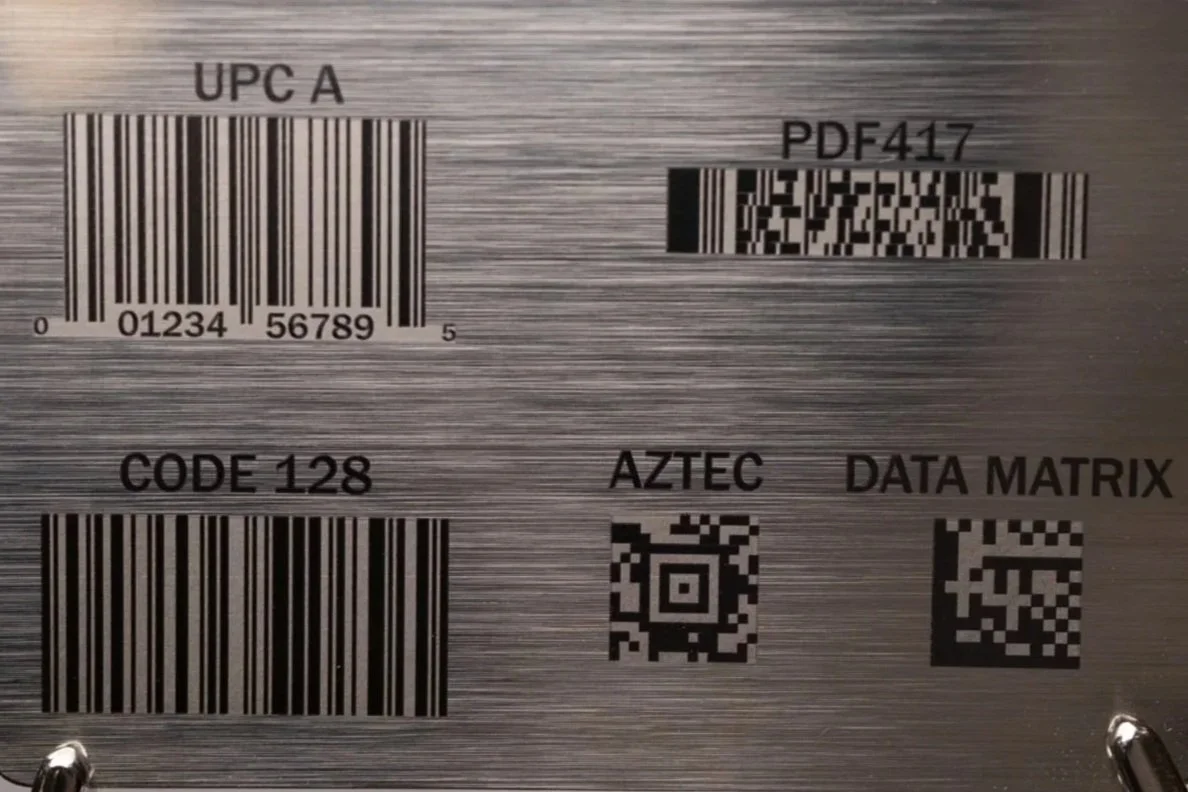
Sample data markings on 304 stainless steel.
For medical device engineers and project managers, the "mark" on a device is far more than a label; it is a critical functional requirement. With the global rollout of Unique Device Identification (UDI) mandates, the pressure to produce high-contrast, machine-readable codes that survive the harsh lifecycle of a surgical instrument has never been higher.
When working with medical-grade Stainless Steel and Titanium (Grade 5/Ti-6Al-4V), the choice of equipment is paramount. Utilizing a 50W HO-MOPA (High Output-Master Oscillator Power Amplifier) Laser provides a distinct engineering advantage over standard fiber lasers by offering precise control over the pulse duration.
1. The MOPA Advantage: Beyond Standard Nanosecond Marking
While standard fiber lasers have fixed pulse durations, a MOPA architecture allows engineers to independently tune the pulse width (from 2ns to 500ns) and frequency. This flexibility is the key to mastering "Cold Marking" and high-contrast annealing.
How it Works
In a medical context, Laser Annealing is the preferred method. The laser heat migrates carbon and oxygen to the surface of the metal, creating a permanent dark oxide layer without removing material.
Engineering Advantage: Because the surface remains smooth, there are no "nooks" for bio-burden or bacteria to collect. It maintains the strict geometric tolerances required for precision surgical instruments.
The High Output (HO) Factor: With 50W of high-output power, we can maintain high throughput while utilizing shorter pulse widths. Shorter pulses (in the 2–10ns range) minimize the Heat Affected Zone (HAZ), preventing the chromium depletion that causes marks to rust or fade during passivation.
2. Optimizing for Stainless Steel
To achieve a "Surgical Black" mark on stainless steel that remains dark after Citric or Nitric acid passivation, MOPA technology allows for a much wider process window.
The Goal: A high-contrast mark that remains chemically stable.
Pulse Tuning: By using shorter pulse durations at high frequencies, we can "grow" a dense, dark oxide layer with minimal thermal penetration into the bulk material.
Project Manager Tip: During the RFQ stage, always specify the passivation method. Nitric acid is chemically aggressive; however, a MOPA-annealed mark is significantly more resistant to the "bleaching" effect than a standard Q-switched mark.
3. Titanium Color Marking and Precision
Titanium offers a unique opportunity for MOPA lasers: Advanced Color Coding. Because we can control the pulse width so finely, we can achieve highly repeatable interference colors (blue, gold, magenta, green) by precisely varying the thickness of the titanium oxide layer.
OR Efficiency: Color-coding is invaluable for orthopedic sets (e.g., color-coding screw diameters or plate types) to reduce errors in the operating room.
Durability: Unlike inks or coatings, laser-induced color is part of the base material and will not chip, peel, or compromise biocompatibility.
4. UDI Compliance: Data Matrix Integrity
A UDI mark typically consists of a GS1 Data Matrix and human-readable text. For project managers, the "Grade" of the barcode is the ultimate KPI for process validation.
Contrast is King: MOPA lasers produce a more uniform "matte" black finish, reducing the specular reflection (glare) that often causes machine vision systems to fail when reading barcodes on curved metallic surfaces.
Spot Size & Resolution: Our 50W HO MOPA system provides the beam quality necessary to achieve fine resolution for micro-marks (down to 0.5mm) while maintaining a "Grade B" or higher readability per AIDC Grading (Automatic Identification and Data Capture) under ISO/IEC 15415 standards. While AIDC is the broad category of auto-ID technology, ISO/IEC 15415 is the specific standard that quantifies how well that data is "captured" based on contrast and cell consistency.
5. Validation Checklist for MOPA Processes
When validating a device marked with any laser marking system, your plan should include:
Corrosion Testing (ASTM A967): Verification that the mark survives passivation without "halo" rusting.
Autoclave Survivability: Evidence of contrast retention through 50+ sterilization cycles.
AIDC Grading: Verification of the Data Matrix "L" pattern and clocking pattern integrity.
Surface Roughness (Ra): Ensuring the annealing process has not altered the surface finish beyond the original specification.
Conclusion
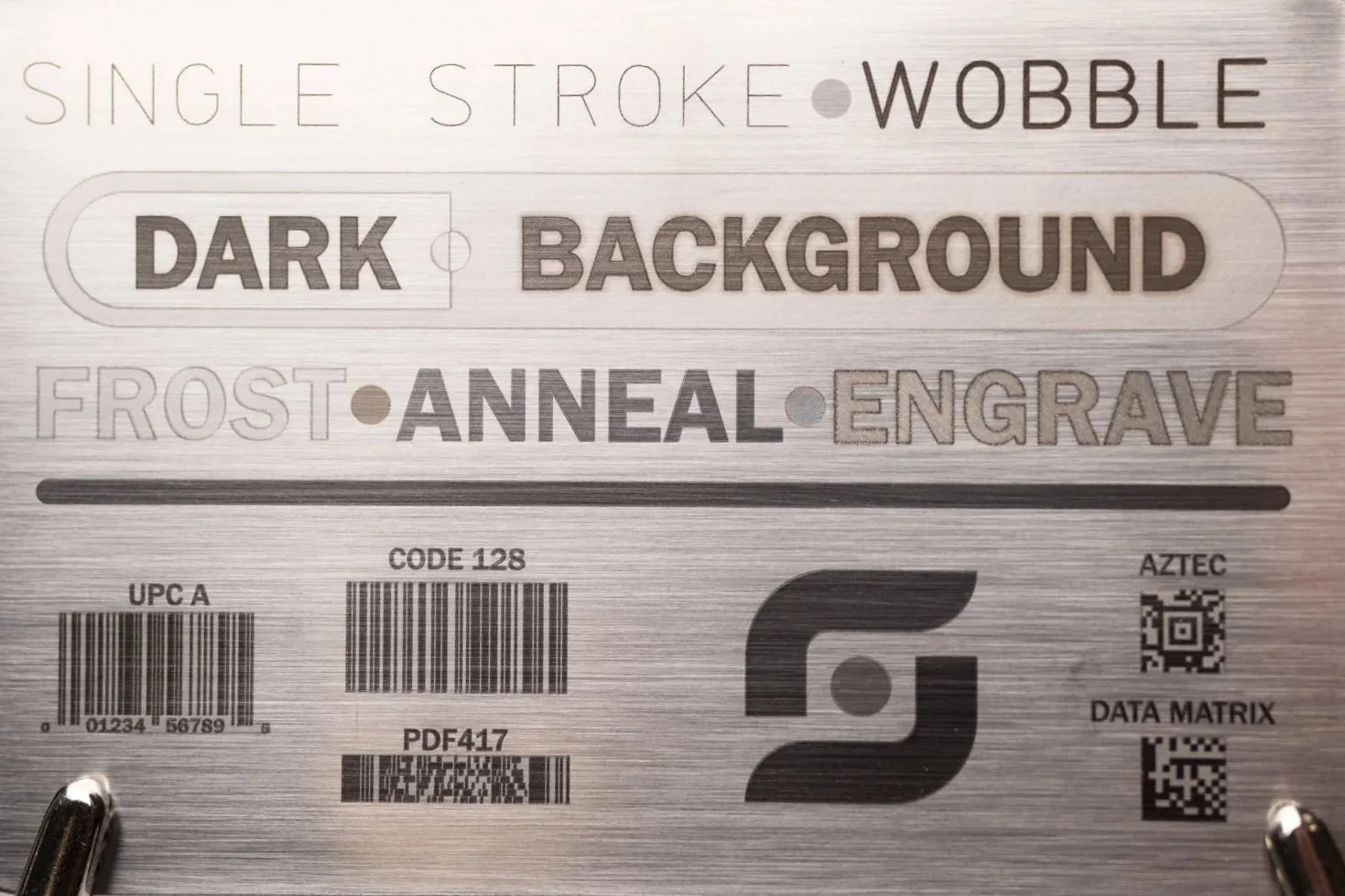
Types of markings
MOPA lasers are the gold standard for medical device marking. Its ability to fine-tune energy delivery allows for high-contrast, corrosion-resistant marks that standard lasers simply cannot match. By leveraging this technology, engineers can ensure their devices remain traceable, compliant, and—most importantly—safe for the patient throughout their entire clinical life.
Are you looking to optimize your UDI marking? Contact our engineering team for a feasibility study and AIDC grading report on your Stainless Steel or Titanium samples.