Beyond the Tape: Solving the Masking Bottleneck with Laser Ablation
In high-precision manufacturing, selective coating has long been a production bottleneck. For decades, the standard has been "mask-and-coat"—a process requiring meticulous manual application of tapes, plugs, or caps before a part enters the coating chamber.
However, a shift is occurring. Forward-thinking operations are moving to a "coat-and-ablate" strategy, utilizing fiber lasers to strip coatings with surgical precision. By eliminating the masking stage, facilities see immediate jumps in throughput and a drastic reduction in scrap rates.
The High Cost of "Good Enough" Masking
Manual masking is inherently labor-intensive and relies on human consistency. In sectors like medical device manufacturing, where a surgical instrument may require an insulative coating on only a portion of its surface, the "keep-out" zones must stay pristine. The hidden costs of traditional masking include:
Adhesive Residue: Removing tape often leaves microscopic contaminants that require additional cleaning cycles.
Accuracy Limits: Manual masking has a tolerance ceiling; a mask slip of even 0.50mm can result in a non-compliant part.
Waste: Single-use masks create significant waste streams and high consumable overhead.
The "Coat-and-Ablate" Advantage
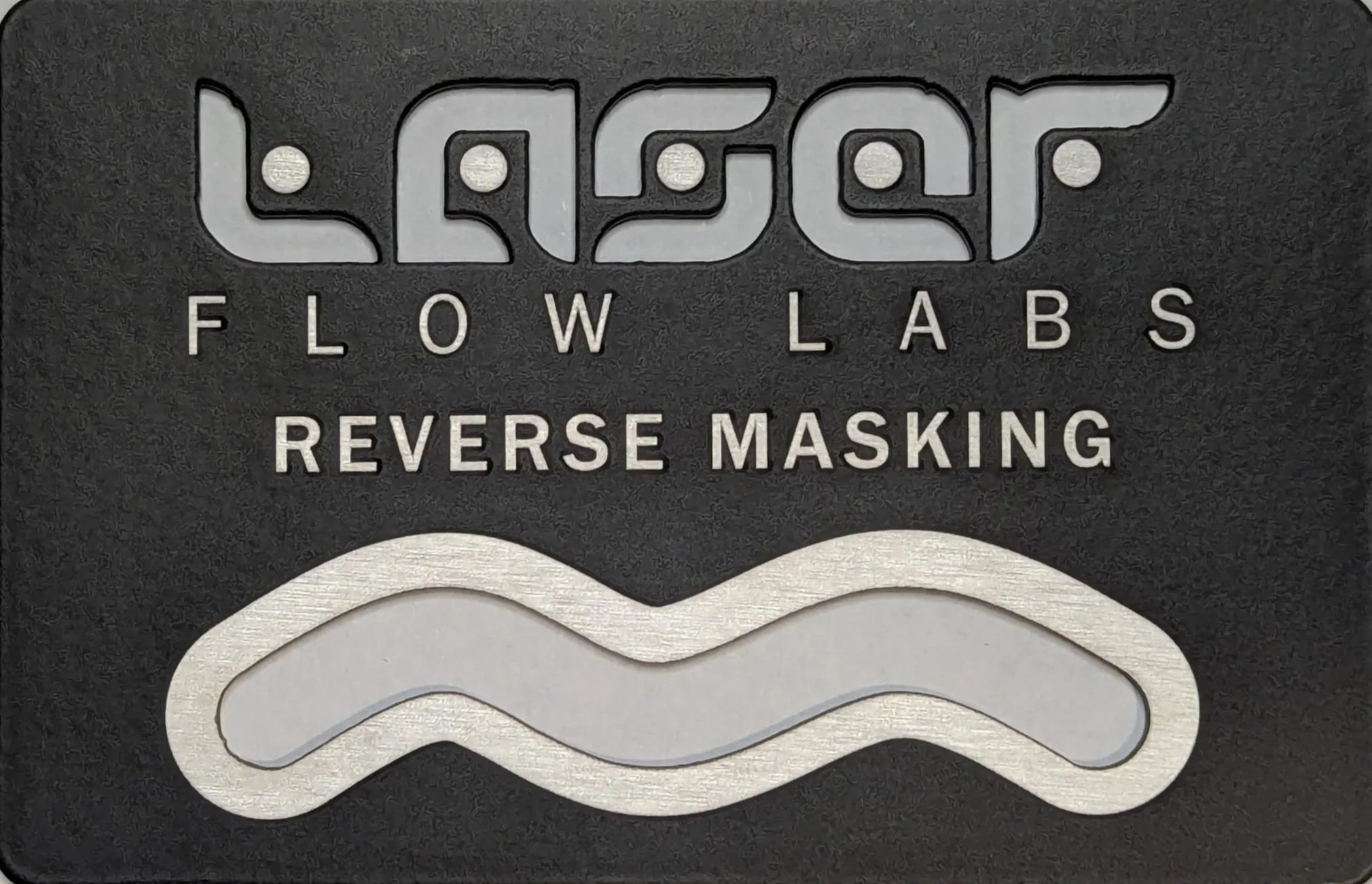
Powder coated sample
In a selective ablation workflow, parts are coated in bulk with no pre-processing time. Once coated, a 50W MOPA fiber laser vaporizes the coating in designated zones in seconds.
Because the process is CNC-controlled, repeatability is near-perfect at <+/-0.025mm. This allows for complex geometries—such as the "wavy holes" used in our latest sample kits—that are physically impossible to mask by hand. Furthermore, MOPA technology allows for "cold" marking, where nanosecond pulses vaporize the coating without damaging or distorting the underlying metal substrate.
Precision Applications
Laser ablation is now the preferred method for critical functional zones:
Electrosurgical Tools: Removing insulation from forceps or needle tips to ensure perfect electrical contact.
Orthopedic Pins: Clearing threaded areas where a precise fit-to-bone is paramount, leaving the metal pristine for ASTM A967 standards.
Vascular Stents: Precision removal of drug-eluting coatings with micron-level accuracy.
Conclusion: Designing for Performance
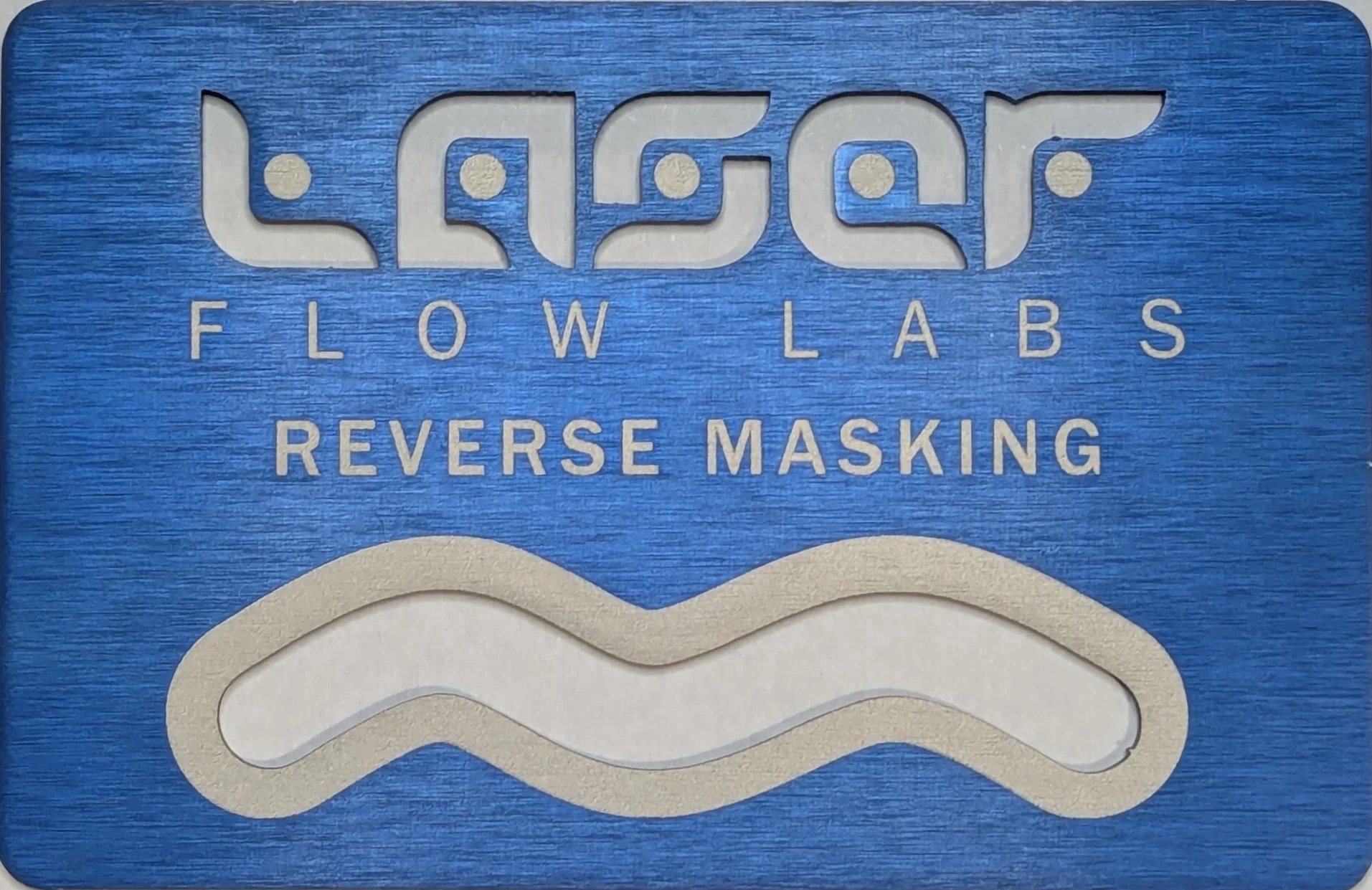
Anodized sample
Laser ablation allows engineers to rethink part geometry. Instead of designing a part around what can be masked, they can design for optimal performance and let the laser handle the "clean-up". By removing physical masks, you produce higher-quality parts faster, with lower overhead and zero adhesive contamination.
Stop babysitting your masking process. Contact the engineering team at Laser Flow Labs for a free feasibility study on your toughest coating challenges.